
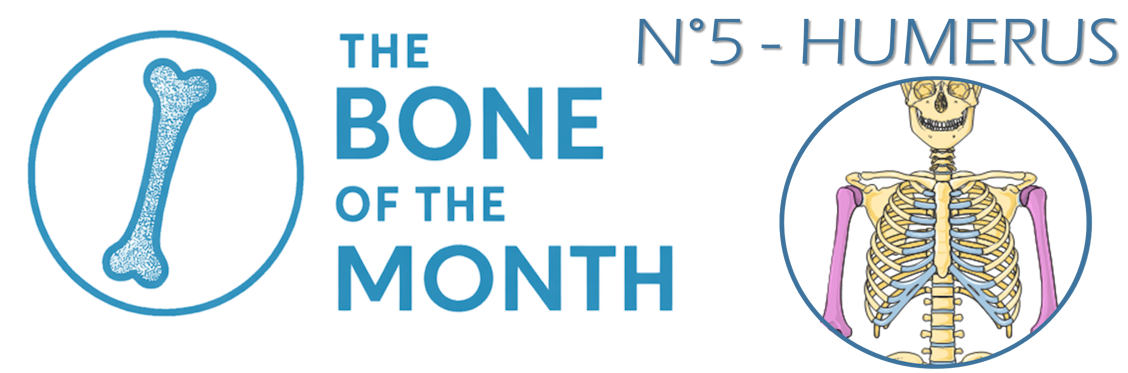
🦴 𝐁𝐨𝐧𝐞 𝐨𝐟 𝐭𝐡𝐞 𝐌𝐨𝐧𝐭𝐡 – 𝟓: 𝐓𝐡𝐞 𝐇𝐮𝐦𝐞𝐫𝐮𝐬 🦴
Exploring the fascinating world of bone biology…
Let’s continue our “𝐁𝐨𝐧𝐞 𝐨𝐟 𝐭𝐡𝐞 𝐌𝐨𝐧𝐭𝐡” series with one of the major bones of the upper limb: the humerus.
Extending from the shoulder to the elbow, the humerus is the longest and largest bone of the upper arm, typically measuring 26 to 35 cm in adults.
It plays a central role in mobility, strength, and load transmission, forming essential joints with both the scapula and the forearm bones.
𝐈𝐧 𝐩𝐫𝐞𝐜𝐥𝐢𝐧𝐢𝐜𝐚𝐥 𝐫𝐞𝐬𝐞𝐚𝐫𝐜𝐡, 𝐭𝐡𝐞 𝐡𝐮𝐦𝐞𝐫𝐮𝐬 𝐢𝐬 𝐚 𝐤𝐞𝐲 𝐦𝐨𝐝𝐞𝐥 𝐟𝐨𝐫:
✅ Bone remodeling and mechanical adaptation
✅ Fracture healing and orthopedic implant evaluation
✅ Osteoporosis and age-related bone fragility
✅ Tendon-to-bone interactions at the shoulder joint
Because of its size and accessibility, the humerus is frequently studied using microCT imaging, histology, and biomechanical testing to assess bone quality, density, and structural strength.
💡 Fun fact: bones are remarkably adaptable structures. Studies have shown that in high-level athletes such as tennis players, the humerus of the dominant arm can become thicker, denser, and structurally stronger due to repeated mechanical loading over time.
A striking example of how bone continuously adapts to its environment and function.
At Atlantic Bone Screen, 𝐰𝐞 𝐞𝐱𝐩𝐥𝐨𝐫𝐞 𝐭𝐡𝐞 𝐝𝐲𝐧𝐚𝐦𝐢𝐜 𝐧𝐚𝐭𝐮𝐫𝐞 𝐨𝐟 𝐛𝐨𝐧𝐞 𝐭𝐢𝐬𝐬𝐮𝐞, from cellular activity to whole-animal models, helping our partners better understand musculoskeletal diseases and develop innovative therapies.
👀 Stay tuned for next month’s Bone of the Month and discover another fascinating structure from the human skeleton through the lens of science…