
🦴 𝐁𝐨𝐧𝐞 𝐨𝐟 𝐭𝐡𝐞 𝐌𝐨𝐧𝐭𝐡 n° 𝟔: 𝐓𝐡𝐞 𝐌𝐚𝐧𝐝𝐢𝐛𝐥𝐞 🦴
Exploring the fascinating world of bone biology…
Let’s continue our “𝐁𝐨𝐧𝐞 𝐨𝐟 𝐭𝐡𝐞 𝐌𝐨𝐧𝐭𝐡” series with one of the most recognizable and functional bones of the human skeleton: the mandible.
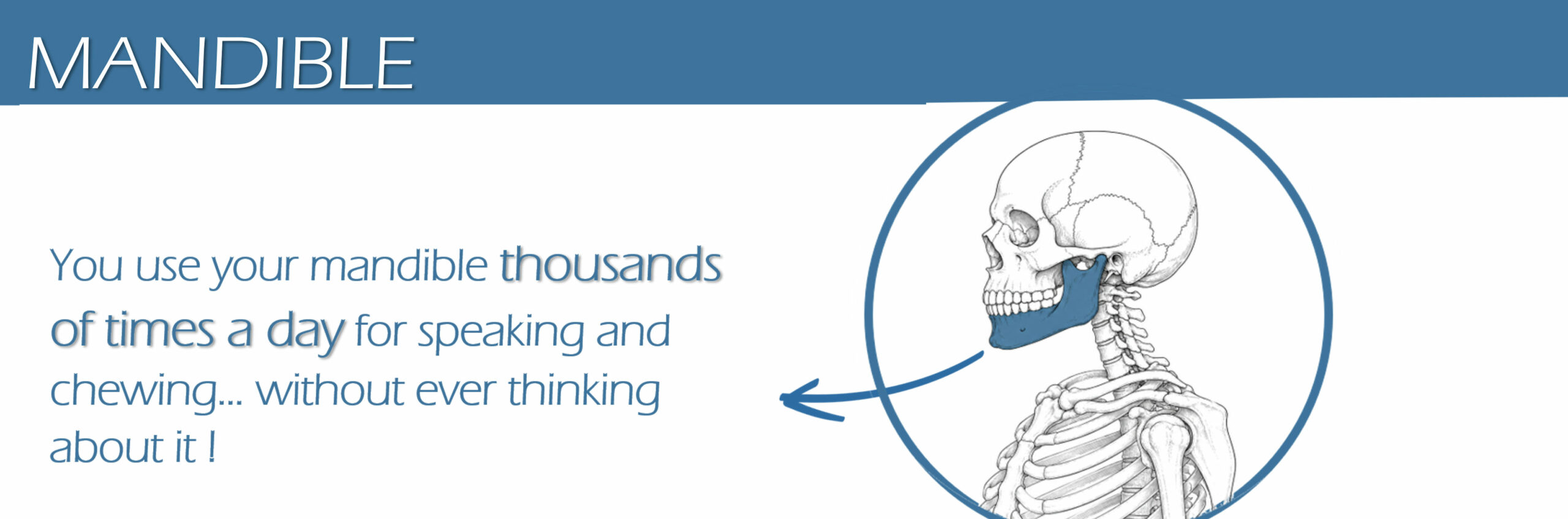
You use your mandible thousands of times a day… without ever thinking about it. Yet this bone is constantly remodelling itself, adapting to the chewing forces and changes in your bite.
Also known as the lower jawbone, the mandible is the largest and strongest bone of the human face.
Typically measuring around 10–12 cm in adults, it plays an essential role in chewing, speaking, maintaining facial structure, and airway maintenance.
Unlike most skull bones, the mandible is mobile, articulating with the temporal bone through the temporomandibular joint (TMJ), one of the most complex joints in the body.
💡 Fun fact: the mandible is the only movable bone of the skull, and one of the few bones capable of withstanding extremely repetitive loading throughout life, with humans performing thousands of jaw movements every day for speaking and chewing.
𝐈𝐧 𝐩𝐫𝐞𝐜𝐥𝐢𝐧𝐢𝐜𝐚𝐥 𝐫𝐞𝐬𝐞𝐚𝐫𝐜𝐡, 𝐭𝐡𝐞 𝐦𝐚𝐧𝐝𝐢𝐛𝐥𝐞 𝐢𝐬 𝐚 𝐤𝐞𝐲 𝐦𝐨𝐝𝐞𝐥 𝐟𝐨𝐫:
✅ Bone remodeling and regeneration
✅ Dental implant and biomaterial evaluation
✅ Osteonecrosis and inflammatory bone diseases
✅ Mechanical loading and bone adaptation studies
Because of its high remodeling activity and direct exposure to mechanical stress, the mandible is particularly relevant for studying bone healing, biomaterial integration, and tissue regeneration, using approaches such as histology, microCT imaging, and biomechanical analysis.
At Atlantic Bone Screen, 𝐰𝐞 𝐞𝐱𝐩𝐥𝐨𝐫𝐞 𝐛𝐨𝐧𝐞 𝐛𝐢𝐨𝐥𝐨𝐠𝐲 𝐟𝐫𝐨𝐦 𝐦𝐢𝐜𝐫𝐨𝐬𝐭𝐫𝐮𝐜𝐭𝐮𝐫𝐞 𝐭𝐨 𝐟𝐮𝐧𝐜𝐭𝐢𝐨𝐧, supporting translational research and innovation in bone, dental, and osteoarticular diseases.
👀 Stay tuned for next month’s Bone of the Month and discover another fascinating structure from the human skeleton through the lens of science…